
Buying Trucks or Tools? The 2026 Guide to Using Bonus Depreciation the Right Way

If you have been waiting for the right moment to upgrade your fleet or invest in high-end machinery, 2026 is the year to act. For many business owners in the HVAC, plumbing, and construction industries, the cost of equipment is one of the largest overhead expenses. Understanding how to write off these purchases can mean the difference between a heavy tax bill and a significant cash injection back into your operations.
In 2026, the tax landscape has shifted in favor of business growth. Thanks to recent legislative updates, bonus depreciation has been restored to a full 100%. This means you can potentially deduct the entire cost of qualifying trucks and tools in the very first year you put them to work. However, navigating these rules requires more than just a receipt; it requires a strategic approach to small business bookkeeping and tax filing for businesses.
What is Bonus Depreciation in 2026?
Bonus depreciation is a tax incentive that allows businesses to immediately deduct a large percentage of the purchase price of eligible assets. Unlike standard depreciation, which forces you to spread the cost of an asset over its "useful life" (often 5 to 7 years), bonus depreciation accelerates that timeline.
For the 2026 tax year, the rate is set at 100%. This is a crucial window for business owners. Under the previous phase-down schedule, this rate was expected to be much lower, but current policy shifts have brought back the full deduction. If you purchase a $60,000 piece of equipment today, you can potentially reduce your taxable income by that full $60,000 this year, rather than taking small deductions through 2031.
Why the 2026 Window Matters
Tax laws are rarely permanent. While 100% is the current standard, the rate is scheduled to begin phasing down again in 2027, likely dropping to 80% and continuing to decrease annually thereafter. This makes 2026 a "goldilocks" year for major capital investments. If you are debating whether to buy that new service truck now or wait until next spring, the tax savings available right now provide a compelling reason to move forward.
Section 179 vs. Bonus Depreciation: Know the Difference
One of the most common questions we receive at SociaTax, Inc. is whether a business should use Section 179 or Bonus Depreciation. While they both allow for immediate expensing, they serve different purposes and have different limitations.
Section 179: The Capped Deduction
Section 179 is designed primarily for small to medium-sized businesses. For 2026, the deduction limit is approximately $2,560,000. However, Section 179 has a "spending cap." If your total equipment purchases for the year exceed a certain threshold (around $4 million), the deduction begins to phase out dollar-for-dollar.
Furthermore, Section 179 cannot create a net loss for your business. You can only use it to bring your taxable income down to zero.
Bonus Depreciation: The Uncapped Powerhouse
Bonus depreciation, on the other hand, has no dollar limit. Whether you spend $50,000 or $50,000,000, you can apply the 100% deduction. More importantly, bonus depreciation can create a tax loss. If your equipment purchase exceeds your income, you can carry that loss forward to offset future profits, providing a long-term strategic advantage for your tax filing for businesses.
The IRS Order of Operations: When calculating your year-end figures, the IRS requires a specific order:
Apply Section 179 first.
Apply Bonus Depreciation to any remaining "basis" (the leftover cost).
By using both in tandem, you maximize your immediate cash flow.
The "Heavy Truck" Advantage: A Game Changer for Contractors
For contractors, the vehicle you drive is often your most expensive tool. The IRS treats vehicles differently based on their Gross Vehicle Weight Rating (GVWR).
Heavy SUVs and Pickups (Over 6,000 lbs GVWR)
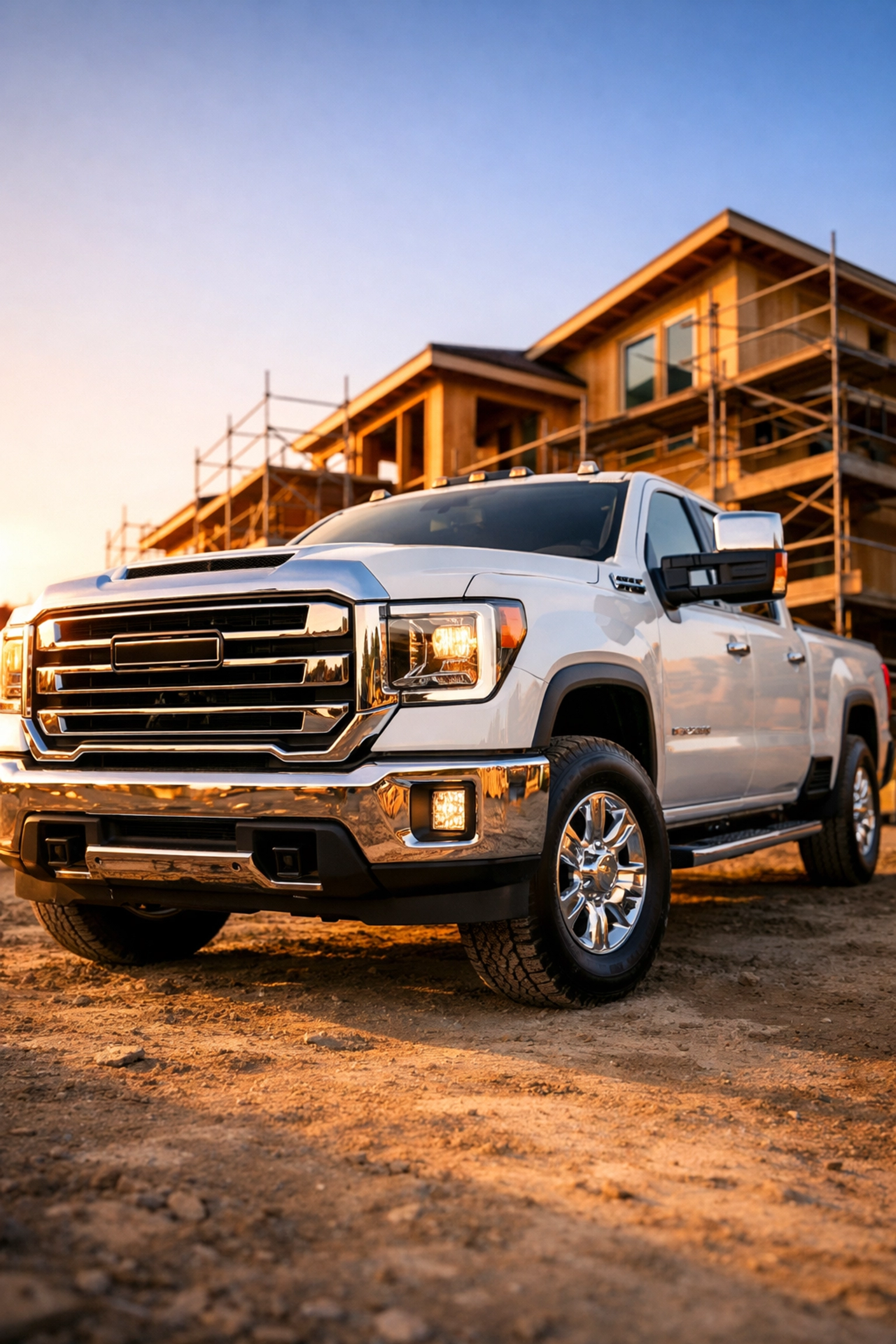
If you purchase a heavy SUV or a pickup truck with a GVWR between 6,001 and 14,000 pounds, you hit a "sweet spot" in the tax code.
Section 179 caps the deduction for these heavy SUVs at $31,300.
Bonus Depreciation has no cap on these same vehicles.
Example Scenario: Imagine you purchase a heavy-duty pickup truck for $90,000 to haul equipment to job sites.
Using Section 179, you take the first $31,300.
The remaining basis is $58,700.
Because Bonus Depreciation is 100% in 2026, you take the remaining $58,700 immediately.
Total Year-One Deduction: $90,000.
Without these provisions, you would be forced to deduct that $90,000 over five years, significantly reducing your immediate tax relief.
Tools, Equipment, and Upfitting
It isn’t just about the wheels. Bonus depreciation applies to a wide range of tangible property used in your business:
Machinery: Backhoes, forklifts, and specialized diagnostic tools.
Office Equipment: Servers, computers, and high-end furniture.
Upfitting: This is a commonly missed deduction. If you buy a van and spend $15,000 on custom shelving, specialized racks, and a professional wrap, that $15,000 qualifies for 100% bonus depreciation alongside the vehicle itself.
Ensuring these costs are captured correctly in your small business bookkeeping is essential. If your records don't clearly separate the cost of the asset from non-qualifying expenses, you risk losing the deduction during an audit. You can learn more about why detailed records matter in our post on the vital importance of bookkeeping.
The "50% Rule" and Other Critical Requirements
To claim bonus depreciation, the IRS has strict "Qualified Property" rules. If you don't meet these, your deduction could be disqualified.
Business Use Must Exceed 50%: If you use a truck 40% for business and 60% for personal weekend trips, you cannot use bonus depreciation or Section 179. You must use the asset for business more than half of the time.
Placed in Service: The equipment must be "placed in service" by December 31, 2026. Buying a truck on December 30th but not taking delivery until January 5th means you lose the 2026 deduction.
New or Used?: Currently, bonus depreciation applies to both new and "neatly used" equipment, provided it is new to you.
Documentation is Non-Negotiable
For vehicles specifically, the IRS frequently looks for mileage logs. If you claim 100% business use but cannot provide a log showing dates, destinations, and business purposes for your trips, you are vulnerable. Clean small business bookkeeping includes maintaining these digital or physical logs throughout the year, not trying to recreate them during tax season.
Common Mistakes to Avoid in 2026
Even with a 100% deduction available, there are traps that can lead to unexpected tax bills later.
Forgetting About Recapture: If you write off 100% of a truck in 2026 and then sell that truck in 2028, you may have to "pay back" some of that deduction. This is known as depreciation recapture.
Ignoring State Tax Laws: Not all states follow federal bonus depreciation rules. Some states "decouple" from federal law, meaning you might get a massive federal deduction but still owe significant state taxes.
Inaccurate Basis Tracking: If you trade in an old truck to buy a new one, your "basis" (the amount you can deduct) is affected by the value of the trade-in. Miscalculating this is a top reason for errors in tax filing for businesses.

Strategic Action Steps for 2026
If you are planning to grow your business this year, follow this checklist to ensure you are utilizing bonus depreciation correctly:
Audit Your Fleet and Tools: Identify what needs replacing or upgrading before the end of the year.
Check GVWR Ratings: If buying a vehicle, confirm it is over 6,000 lbs to bypass the SUV deduction caps.
Review Your Profit and Loss: Work with a bookkeeper to see if you have the income to offset or if creating a loss is the better strategy for your 2026 goals. You can review our guide on monthly financial reporting to see how to track these figures.
Keep Installation Receipts: Ensure any costs for "upfitting" are bundled into the asset's total cost for a full deduction.
Time Your Purchase: Ensure the item is on your lot and ready for use before December 31st.
Frequently Asked Questions
Can I use bonus depreciation for a used truck? Yes, as long as the equipment is "new to the taxpayer," used equipment generally qualifies for bonus depreciation under current 2026 rules.
What happens if I use the truck for personal errands? If your business use drops below 100%, you can only deduct the business percentage. For example, if you use a $50,000 truck 80% for business, your deduction is $40,000. If business use drops to 50% or less, you lose bonus depreciation entirely.
Is it better to lease or buy with these rules? Usually, buying allows for a much larger immediate tax deduction through bonus depreciation. Leasing generally results in deducting the monthly payments over time. Every business is different, so it is vital to run the numbers based on your specific cash flow.
Conclusion
The restoration of 100% bonus depreciation in 2026 provides a powerful tool for HVAC, plumbing, and construction businesses to reinvest in themselves. By understanding the interplay between Section 179 and bonus depreciation, and by maintaining impeccable records, you can significantly lower your tax liability and keep more of your hard-earned money in your business.
Don't wait until December to start thinking about your equipment strategy. Proper small business bookkeeping starts now. If you're unsure how these purchases will impact your year-end results, contact SociaTax, Inc. today. We can help you navigate the complexities of tax filing for businesses and ensure your growth is as tax-efficient as possible.
Comments